Every September, Hawaiʻi pauses to celebrate something that no resort luau or tourist brochure can replicate: the living, breathing, joyful heart of its own culture. Aloha Festivals Hawaii is the largest Hawaiian cultural celebration in the United States — a month-long statewide series of hula, royal pageantry, music, parades, and community that has been running since 1946. In 2026, it reaches its 80th anniversary. This is our complete guide to every major event, what to expect, and how to build your Oʻahu visit around it.
There is no equivalent to Aloha Festivals anywhere else in the country. The Aloha Festivals are an annual series of free cultural celebrations rooted in the Makahiki — the beginning of the Native Hawaiian year — and it is the only statewide cultural festival in the nation. Approximately 30,000 people volunteer to plan, organize, and provide labor for the Aloha Festivals each year, entertaining over 1,000,000 people from throughout the state and visitors from all over the world. Every stop on your Oʻahu itinerary can flex around what we build together — we tailor each private tour to your group's interests and timing.
80 Years of Aloha: The History
Aloha Festivals began in 1946 as "Aloha Week," founded by the Jaycees Old-Timers of Hawaiʻi as a cultural celebration of Hawaiian history and performing arts. It ran under that name for 45 years and was formally rebranded Aloha Festivals in 1991. The intention from the very start was to perpetuate the islands' unique traditions — and to make sure that intention was public, joyful, and open to everyone.
The context matters. Since its founding in 1946 as Aloha Week, Aloha Festivals has served as a bridge between past and present, uplifting the ʻike (knowledge), practices, and stories that shape Hawaiʻi's history. Hawaiian culture — hula, chant, the Hawaiian language — had faced suppression for generations before that. The postwar founders were determined to reverse that erasure publicly, loudly, and beautifully.
In 1946, after the war, Hawaiians needed an identity. When we started to celebrate our culture, we began to feel proud. We have a wonderful culture that had been buried for a number of years. This brought it out again.
— Goriann Akau, former manager of Aloha Festivals, via WikipediaAncient Roots: The Makahiki Connection
Aloha Festivals does not begin and end with modern programming — its September timing is deeply intentional. The Aloha Festivals are rooted in the Makahiki, the beginning of the Native Hawaiian year marked by the sighting of the Pleiades (Makaliʻi). Today, the Aloha Festivals (originally Aloha Week) celebrate the Makahiki tradition.
In ancient Hawaiʻi, Makahiki was a sacred season of rest, games, feasting, and communal renewal. Commoners stopped work, made offerings to the chief or aliʻi, and then spent their time practicing sports, feasting, dancing, and renewing communal bonds. During the Makahiki season, warfare was forbidden — a ritually inscribed truce that turned the whole archipelago toward peace and community. The modern Aloha Festivals carry that same spirit: a time to come together, to celebrate, and to honor what makes these islands unlike anywhere else on earth.
The 2026 Oʻahu Signature Events
Aloha Festivals is comprised of three main signature events that occur throughout September on the island of Oʻahu. Most events are free, all ages, and open to visitors without reservation. Here is what is confirmed for 2026 on the official Aloha Festivals calendar:
The Royal Court Investiture
The Royal Court Investiture and Opening Ceremony kicks off the month-long Aloha Festivals celebration with its treasured cultural protocols. The evening begins with a stately ceremony honoring Hawaiʻi's aliʻi (ruling chiefs), as the Aloha Festivals Royal Court dons regalia worn only by aliʻi of the highest rank. As representatives of Hawaiʻi's past, the Aloha Festivals Royal Court ensures the festival is rooted in the most cherished traditions of Hawaiʻi.
The court is selected from a pool of applicants, all of whom must be of Hawaiian ancestry and of certain ages. Each year the Aloha Festivals Royal Court is selected — a King and Queen (Aliʻi) along with a court of nobles representing each island. They appear at events throughout the festival season, lead the floral parade on horseback, and serve as cultural ambassadors.

The Waikīkī Hoʻolauleʻa
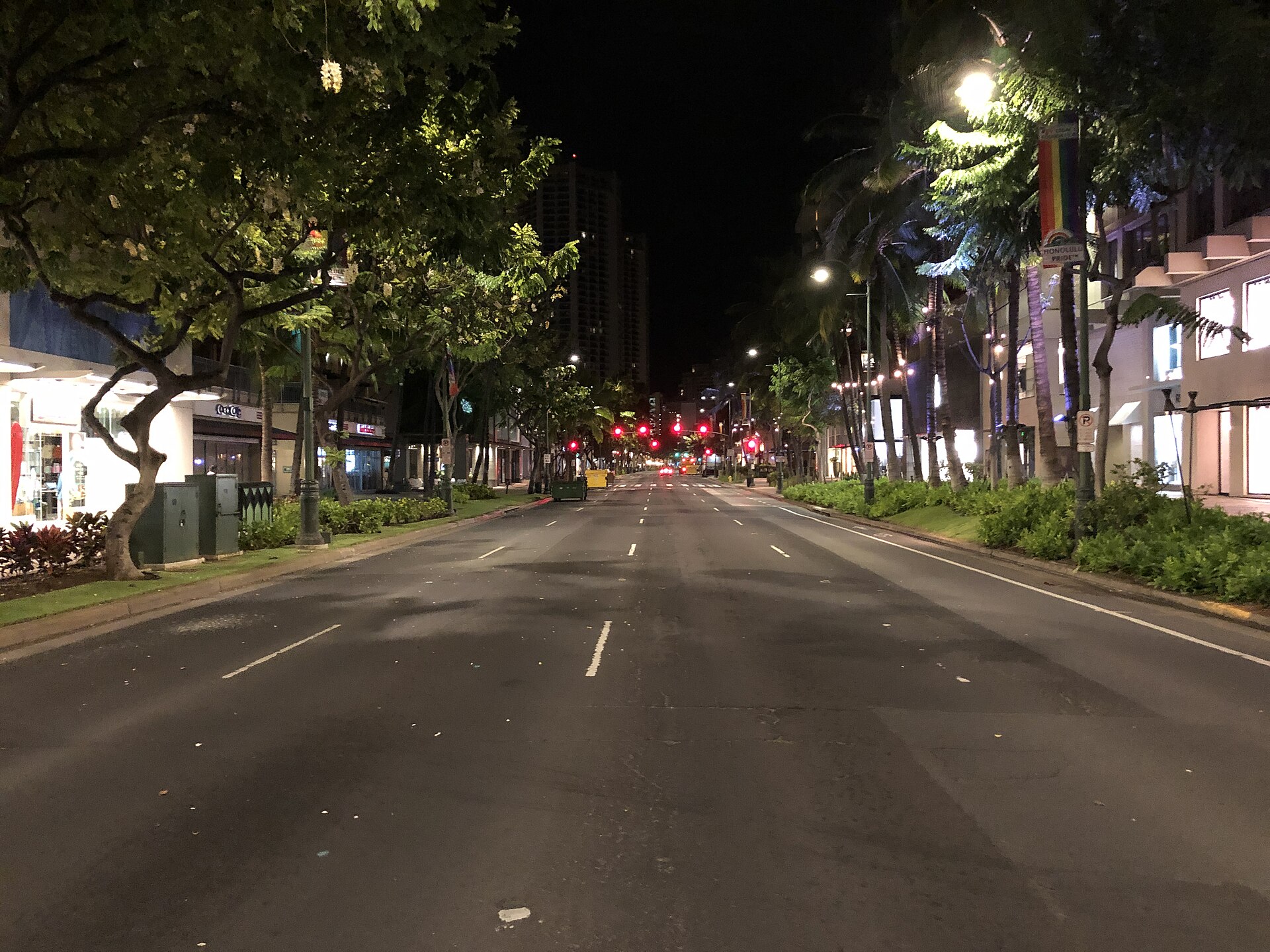
If you can only attend one event on Oʻahu, make it the Hoʻolauleʻa. Aloha Festivals hosts Hawaiʻi's largest block party with the Annual Waikīkī Hoʻolauleʻa. Kalākaua Avenue is transformed with booths showcasing Hawaiʻi cuisine, crafts, and culture stretching as far as the eye can see. You can taste the best of local flavors from around the island in one place and peruse artisan-made crafts. Multiple stages with incredible entertainment rock the evening, featuring top local artists, award-winning hālau hula, and more.
Aloha Festivals is not a tourism event. It was founded by and for the local community in 1946, and despite its size and the occasional resort-sponsored float, it has stayed that way. The crowd at the Hoʻolauleʻa skews heavily local: families, kūpuna, teenagers from across Oʻahu. As a visitor, that is precisely the point. This is the real thing.
The Aloha Festivals Floral Parade
The crown jewel of Aloha Festivals is the Aloha Festivals Floral Parade, one of the most spectacular processions in the Pacific. Floats are constructed entirely from fresh flowers, ferns, and foliage — no silk, no plastic, nothing artificial.
The procession runs down Kalākaua Avenue from Ala Moana Beach Park through Waikīkī to Kapiʻolani Park, a route of roughly three miles that typically takes about three hours end to end. Expect Hawaiian pāʻū riders — women in traditional riding attire mounted on flower-draped horses, one rider representing each Hawaiian Island — hula hālau performing along the route, marching bands, floral-covered floats, and the Royal Court at the center of the procession.
Each pāʻū unit represents one of the eight Hawaiian Islands and wears the island's traditional flower and color: ʻilima (yellow) for Oʻahu, lokelani (pink) for Maui, ʻōhiʻa lehua (red) for Hawaiʻi Island, and mokihana (green/purple) for Kauaʻi. Spectators start claiming sidewalk spots as early as 6 a.m. Free viewing is available the entire length of the route; reserved grandstand seats near the Kapiʻolani Park bandstand sell out quickly and can be booked through the Aloha Festivals website.
Beyond Oʻahu: Neighbor Island Events
The Aloha Festivals have expanded into a month-long series of more than 75 events spanning Oahu, Maui, Hawaii Island, Kauai, and Molokai. The neighbor-island component — primarily the Festivals of Aloha Maui Nui on Maui, Molokaʻi, and Lānaʻi — runs into October, so this is really a fall festival season rather than a single month.
Maui created its own Festivals of Aloha, lasting through September and October. On Molokaʻi, the Festival of Aloha honors paniolo (Hawaiian cowboy) traditions. Molokaʻi is typically celebrated in early October; check the Festivals of Aloha Maui Nui site closer to your travel dates for the exact schedule, as neighbor-island programming is confirmed on a rolling basis.
2026: The 80th Anniversary Year
In 2026, Aloha Festivals hits its 80th anniversary, and the official theme is "80 Years of Aloha: Our Culture, Our Stories, Celebrating Our Island Home." This year's theme honors the Royal Court, hālau hula, parade participants, local entertainers, artisans, vendors, volunteers, and community organizations whose dedication and participation have sustained Aloha Festivals for eight decades and continue to carry forward the aloha spirit.
Over the decades, Aloha Festivals has grown into the largest Hawaiian cultural celebration in the U.S. Now renamed Aloha Festivals and held statewide, the event continues to draw large crowds, with major Oahu events attracting more than 100,000 attendees each year. If you have been thinking about timing a Hawaiʻi trip around this celebration, 2026 is the year to do it.
Insider Tips for Visitors
🌺 Make the Most of Aloha Festivals
- 📅Plan around the three Oʻahu anchor dates — September 5 (Royal Court), September 19 (Hoʻolauleʻa), and September 26 (Floral Parade). If you can only pick one, the Hoʻolauleʻa on the 19th is the single most concentrated burst of authentic Hawaiian culture you will find on the island.
- ⏰Arrive early for the Floral Parade — spectators start claiming sidewalk spots as early as 6 a.m. The prime stretch along Kalākaua Avenue fills up fast, especially near the grandstands at Kapiʻolani Park.
- 🌡️September is warm and occasionally humid — bring sunscreen, a hat, and water, especially for the morning parade. Trade-wind showers can pass quickly in the afternoon.
- 🎟️Buy a commemorative ribbon — the festival sells them in lieu of a gate fee and the money funds the nonprofit. It is the right way to participate as a visitor.
- 🙏Observe cultural protocols — if a kumu hula is chanting or a formal protocol moment begins during a performance, put the phone down. These moments are sacred, not content.
- 🍱Eat from the community booths — plenty of the food vendors are community nonprofits raising money for a church, a school, or a hālau of their own. Your plate lunch funds something real.
- 🚗Parking is tight on event nights — Kalākaua Avenue closes to traffic during the Hoʻolauleʻa. Use TheBus, rideshare, or let your private tour handle the logistics entirely.
- 🗓️Check the official site for updates — the full neighbor-island schedule and any additional 80th-anniversary programming will appear at alohafestivals.com as September approaches.
⚠️ Grandstand seats for the Floral Parade sell out quickly. Reserved grandstand seats near the Kapiʻolani Park bandstand sell out quickly and can be booked through the Aloha Festivals website. Free curbside viewing is available the entire length of Kalākaua Avenue — you do not need a ticket to watch. But if you want a premium seated view, book early.
Pair Aloha Festivals with a Private Oʻahu Tour
September is genuinely one of the best months to visit Oʻahu. September is early shoulder season, so rates are noticeably softer than July–August peak. The North Shore is transitioning from summer flat to the first pulses of winter swell. The island is a little quieter. And the Aloha Festivals are running.
Our custom private tours are designed to flex around whatever matters most to your group. Want to watch the Floral Parade in the morning and then explore the Windward Coast in the afternoon? We build that day. Interested in combining the Hoʻolauleʻa evening with a sunset drive along the North Shore earlier in the day? We make that happen. We build your day around what you want — so every stop, every detour, and every moment of downtime is yours to call.
If you are visiting in September and want to experience more of the island culture that Aloha Festivals celebrates all week long, our guides can take you to places that carry that same spirit year-round — from the storied surf town of Haleʻiwa on the North Shore to the protected reef of Hānaumā Bay, or a sweep of Oʻahu's most rewarding September highlights. For those who want to explore Oʻahu's authentic culture in depth, our local hidden gems guide is the perfect complement to festival weekend.
Aloha Festivals Hawaii is not a performance of Hawaiian culture for visitors — it is Hawaiian culture, lived publicly and shared generously. For eight decades, Hawaiʻi's longest-running cultural festival has united generations of kamaʻāina and malihini to honor Hawaiian culture through music, hula, storytelling, and shared cultural experiences. Eighty years in, it shows no sign of slowing down. If you are planning a September trip to Oʻahu, build your dates around the Aloha Festivals — and let us help you make the most of every hour on the island.
Image credits: Photo: Bernard Spragg. NZ / CC0 (Wikimedia Commons) · Photo: Famartin / CC BY-SA 4.0 (Wikimedia Commons) · Photo: Frank Schulenburg / CC BY-SA 4.0 (Wikimedia Commons) · Photo: Forest and Kim Starr / CC BY 3.0 us (Wikimedia Commons) · Photo: Ken Lund from Reno, Nevada, USA / CC BY-SA 2.0 (Wikimedia Commons) · Photo: (c) Don Loarie, some rights reserved (CC BY) / CC BY 4.0 (Wikimedia Commons)